
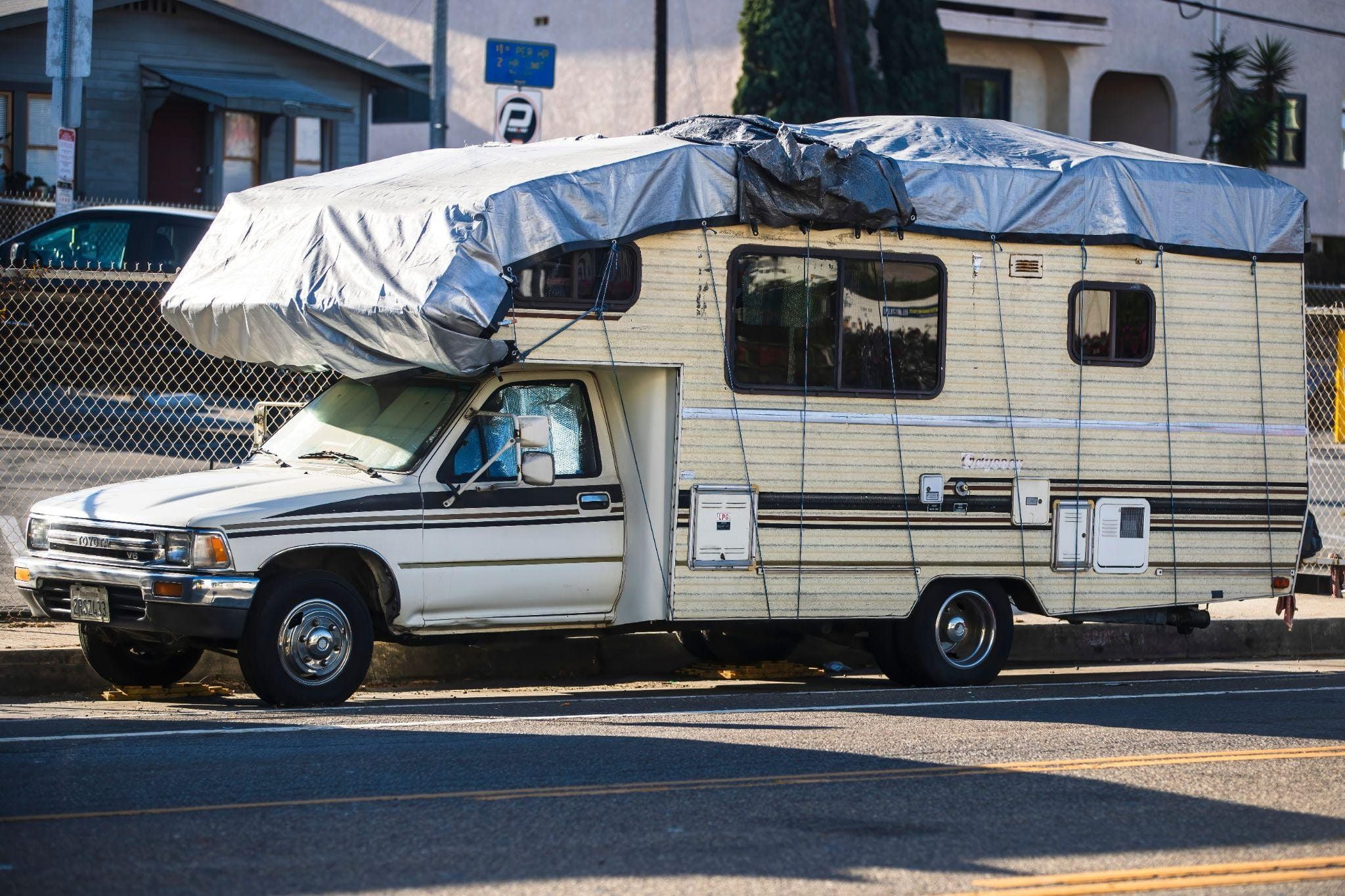
Whether you’re hauling your caravan across town or storing your campervan through the off-season, a tarp is only as good as the way it’s secured. Get it wrong, and you’re dealing with suboptimal storage riddled with constant flapping, torn eyelets, water pooling, and a cover that won’t last.
On the road, a loose tarp can whip hard enough to fray edges, snap tie-downs, and even pose a safety risk to other drivers. Poor tension and gaps leave your caravan or campervan exposed to wind, rain, and debris, defeating the whole purpose of covering it in the first place.
The upside is that securing a tarp properly isn’t really all that complicated. With the right setup and a few proven techniques, you can lock everything down tight, protect your load, and keep your cover quiet, durable, and road-ready.
Why Tarps Flap and Why It Matters
Tarps flap when air gets trapped both above and below the material, creating lift and causing billowing. This can gradually degrade the tarp’s material, strain the eyelets, and greatly increase the risk of tearing and snapping, especially in inclement weather or at higher speeds.
Tarps are meant to flap to some degree; our tarps are made from X-Film, so they are designed to flex in the wind to withstand strain.
At the end of the day, a tightly secured tarp is preferable, as it eliminates gaps in airflow, reduces movement, and significantly extends the life of both the tarp and whatever it’s protecting.
The Legal Side: Flapping Tarps Are Illegal on Australian Roads
In Australia, an unsecured or flapping tarp isn’t just a nuisance… it can actually land you in big trouble. On roads, loads must be properly restrained, and a tarp that’s coming loose or billowing in the wind becomes a hazard and can be considered unsafe.
If your tarp detaches or obstructs other drivers, you could face fines or worse. Properly typing down your tarp will not only help you protect your gear but also ensure you stay compliant and keep everyone on the road safe.
Securing a Tarp on a campervan for Road Travel
You can protect cargo by securely tarping your campervan. When it comes to securing a tarp for road use, your goal is simple: eliminate slack and lock everything down so wind can’t get underneath.
Step 1 — Start at the Front
Always begin at the front of the trailer, where wind pressure is highest. Secure the tarp tightly using strong anchor points. This creates a solid leading edge that prevents air from lifting the tarp as you drive.
If you regularly transport loads, investing in purpose-built trailer covers can make this process faster and more reliable.
Step 2 — Work the Sides from Front to Back
Move along each side of the campervan, securing the tarp at regular intervals. Use ropes, straps, or bungee cords to keep even tension across the length.
The key here is consistency—don’t leave large gaps between tie-down points, as these become entry points for wind.
Step 3 — Cross-Strap Over the Top
To prevent tarp billowing, run straps or ropes over the top of the load from one side of the trailer to the other. This holds the tarp down firmly and stops it from lifting while in motion.
Cross-strapping is especially important for uneven loads, where air pockets are more likely to form.
Step 4 — Tuck and Fold Towards the Rear
Any excess tarp should be neatly folded and tucked towards the rear of the trailer. Avoid leaving loose flaps hanging, as these will catch wind and start the flapping process all over again.
Secure the rear tightly to finish the job and hit the road!
Securing a Tarp Over a Caravan in Storage
Covering a caravan in storage is less about safeguarding against speed and wind and more about long-term protection. The aim is to shield the entire structure while allowing slight flexibility over an extended period.
Cover the Full Profile and Rope the Perimeter
Use a properly sized cover that fits the shape of your caravan. Secure it around the base, ensuring full coverage from the roof to the sides.
High-quality caravan covers are designed to contour to your van, making it easier to achieve a snug, protective fit.
Add Lengthwise and Crosswise Ropes Over the Roof
Run ropes both along the length and across the width of the caravan roof. This keeps the cover anchored and prevents it from lifting during strong winds.
Think of it as creating a grid that holds the tarp firmly in place.
Use Bungee Cords — Not Rigid Rope — at the Eyelets
When attaching to eyelets, flexibility is key. Rigid rope can place excessive stress on fixed points, increasing the risk of tearing.
Instead, use bungee cords with hooks. They absorb movement and tension, helping prevent damage while keeping the cover secure.
Common Mistakes That Cause Tarp Damage
More often than not, practice makes perfect. Over time, you will get used to properly securing your tarp over your caravan or trailer.
And yet, even with the best intentions, a few common mistakes can quickly undo your efforts. Be sure to avoid these common mistakes that can cause damage to your tarp.
Only Securing the Corners
Tying down just the corners leaves large sections of the tarp loose. This is a guaranteed way to create flapping and wear.
Always secure along the edges and across the surface—not just at four points.
Using the Wrong Fasteners
Thin rope, worn straps, or cheap ties can fail under pressure. Using proper tarp ropes and tie-downs can significantly improve durability and performance.
Using a Tarp That’s Too Big
Oversized tarps create excess material, which leads to folding, bunching, and flapping. This not only looks untidy but also increases stress on the tarp.
Choosing the right size heavy-duty tarp ensures a tighter fit and better long-term protection.
Choosing the Right Tarp for the Job
Not all tarps are created equal! Matching the tarp to your specific use case is just as important as how you secure it.
Trailers — Fitted Covers vs Flat Tarps
Flat tarps offer flexibility, but fitted covers provide a cleaner, tighter solution for regular use. If you frequently transport goods, a dedicated trailer tarp or cover will save time and reduce risk.
Caravans — GSM and UV Protection Matter Most
For caravans, durability is key. Look for high GSM ratings and strong UV resistance to withstand Australia’s harsh conditions.
A quality caravan tarp cover will protect against sun damage, rain, and debris without degrading over time.
Extra Protection for High-Wind Areas
If you’re in a particularly windy region, standard tarps may not be enough. Upgrading to extra-heavy-duty tarps provides added strength and resistance to tearing and wear.
Securing a tarp properly isn’t all that complicated, but it does require a bit of care and the right setup. Get it right the first time with a tarp from ARK Tarps, and you’ll protect your gear and avoid unnecessary risks on the road!

 No products in the cart.