When investing in a high-quality tarp, most people might focus on its size, thickness, or material. But in real-world conditions, it’s actually the seams that determine whether your tarp will last you months or even years.
And in Australia, it is especially crucial to use a tarp that can actually withstand our harsh weather conditions.
From long-haul transit and construction to farming and storage, seam failure is one of the most common reasons tarps give out. Understanding the difference between stitched and welded seams could mean the difference between optimal operations and a transportation travesty.
So, let’s break down the real differences between stitched and welded tarp seams and which type will ultimately deliver the durability and strength you need most.
Why Seams Are Where Tarps Fail First
Even the toughest tarps and covers have some weak points, and seams are the most likely culprits. A tarp’s seams are what keep the textile materials together, and if they become too weak and fail, then the entire tarp is liable to unravel.
What Happens at a Seam Under Load
When a tarp is under tension, whether tied down as trailer covers or stretched across outdoor furniture, most of the stress will concentrate along its seams. Add some wind, UV exposure, and water weight into the mix, and those seams are constantly being pulled, flexed, and tested to the max.
A high-quality tarp will be built with strong, tight seams designed to withstand this accumulated stress. But low-quality tarps won’t put as much thought into their seam construction.
Poor seam construction can lead to…
- Fraying or tearing along stitch lines
- Water ingress through needle-sized holes
- Seam separation under heavy loads
- Accelerated wear and tear compared to the rest of the tarp
In short, an overstressed seam will become the point of failure, even if the rest of the tarp is still in good condition.
Welded Seams — How They Work and Why They’re Stronger
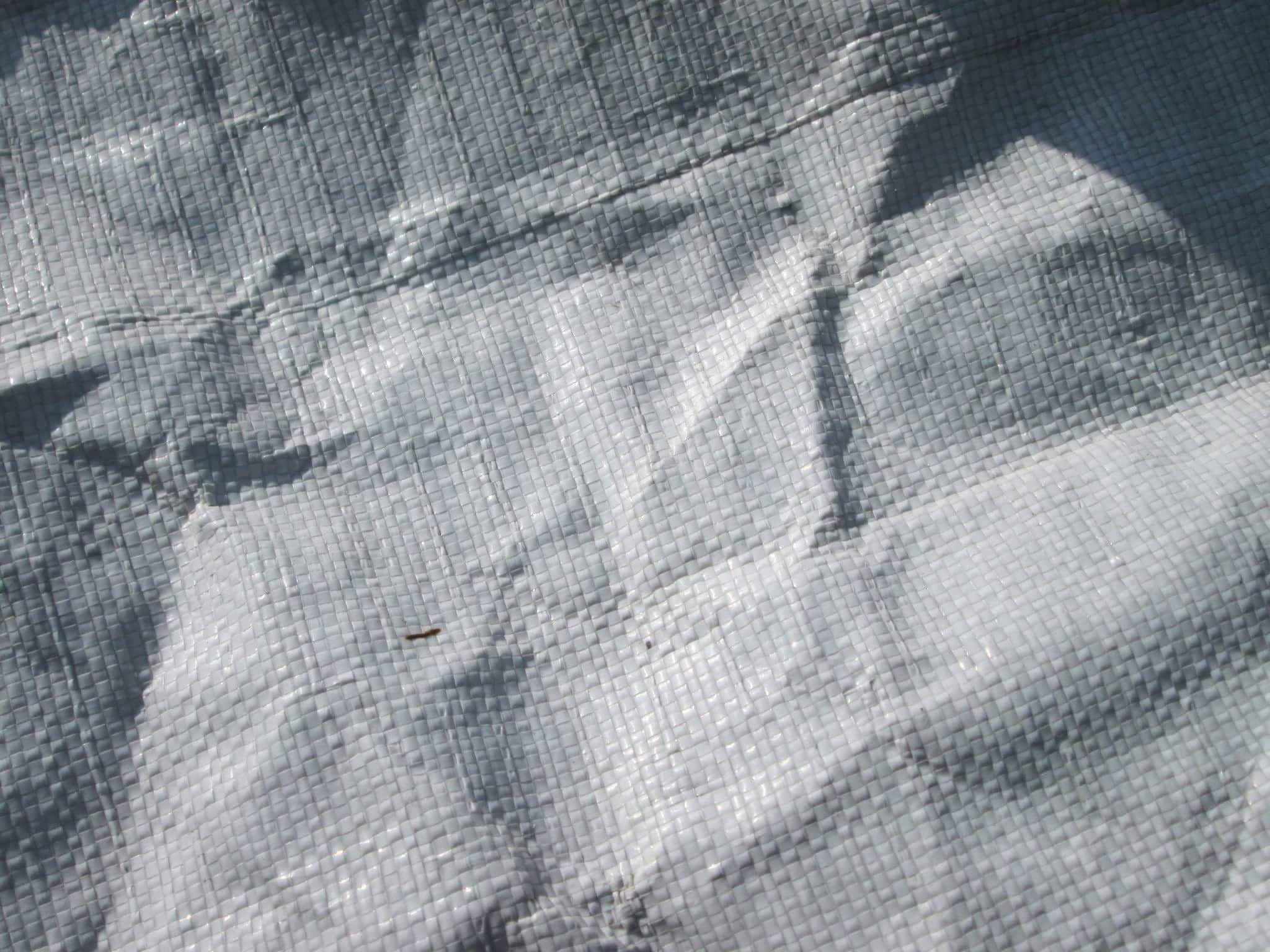
Welded seams are created by bonding materials together with heat and pressure, rather than by threading. This process fuses the layers into a single continuous piece, which is why the waterproof performance of welded tarp seams is significantly higher than that of stitched seams.
Waterproofing — No Needle Holes, No Leaks
If you’re relying on heavy duty tarps, welded seams are the standard for reliable waterproofing. Unlike stitched seams, welded seams don’t puncture the tarp material.
No puncture points mean there are no entry points for water, thus preventing leakage under pressure. This is especially important for applications like transport, where keeping contents dry in variable weather conditions is non-negotiable.
Strength — The Seam Matches the Fabric
A properly executed weld creates a bond that’s often as strong as the tarp material itself. This dramatically improves the performance of heavy-duty tarp seams, particularly in high-stress environments.
With a heat-welded tarp, you enjoy even load distribution across the seam, reducing the risk of tearing. For industrial tarp use or heavy transport, welded seams are the clear winner thanks to their longer lifespan under extreme tension and movement.
Stitched Seams — Where They Still Make Sense
While stitched seams may have limitations, especially when used in the wrong material, they aren’t obsolete. They may not be appropriate for long-term use or for protecting important cargo, but they may provide some temporary or impromptu protection when caught in a bind.
Canvas vs Poly vs PVC — Seam Type Follows Material
Different materials require different approaches. For example, canvas tarps often use stitching effectively because of their breathability; otherwise, welding could damage the canvas. And while PVC tarps perform best with welding, many polythene tarp seams will vary by use case.
If you’re after durability, an extra heavy-duty tarp with welded seams will outperform stitched alternatives every time. Knowing what your tarp is made of will help you determine which seam type is most appropriate for its construction.
What to Look for When Buying a Heavy-Duty Tarp in Australia
Choosing the right tarp isn’t just about material. You need to assess how it’s built from the ground up.
ARK Tarps uses XF-Film, a special type of material that is lightweight, flexible, and incredibly strong. XF Film can stretch and distribute force under pressure, making it designed for exceptional performance and heavy-duty use.
Here are some other features to look out for when sourcing your heavy-duty tarps in Australia.
Seam Construction — Welded Is the Standard for Heavy Duty
For serious applications, welded seams are non-negotiable. Whether you’re securing loads or protecting equipment, they provide the durability and waterproofing that stitched seams simply can’t match.
GSM Rating — Weight Tells You Durability
The tarp GSM rating (grams per square metre) is a key indicator of thickness and strength. A higher GSM will provide:
- Greater resistance to tearing
- Better longevity
- Improved performance under stress
If you’re sourcing an industrial tarp, always check the GSM rating alongside seam construction.
UV Stabilisation — Critical in Australian Conditions
Australia’s UV exposure is brutal on materials. Without proper stabilisation, even the best tarp will degrade quickly.
Look for tarps designed for outdoor endurance, including silage tarps, which are built to withstand prolonged sun exposure without breaking down.
Eyelets — Ultrasonic Welded vs Stamped
Eyelets are another potential failure point. High-quality tarps use reinforced or ultrasonically welded eyelets to prevent tearing around tie-down points.
Avoid thin-stamped eyelets with poorly reinforced edges. These small details can make a big difference in real-world durability.
FAQs
Can you repair a welded tarp seam?
Yes, welded seams can often be repaired using heat welding techniques or specialised patch kits. However, repairs should be done properly to maintain waterproof integrity.
What GSM tarp do I need for heavy-duty use?
For heavy-duty applications, look for tarps in the 200-300+ GSM range at a minimum. Higher GSM provides better strength and durability.
What is the strongest type of tarp material?
While PVC is generally considered the strongest tarp material, especially when combined with welded seams, XF Film is far stronger and a better investment, offering superior durability, flexibility, and waterproofing. But
How long do heavy-duty tarps last in Australian conditions?
With proper use and UV stabilisation, a high-quality tarp can last several years. Cheaper tarps may degrade within months under harsh sun exposure.
What does “UV stabilised” mean on a tarp?
UV stabilisation refers to additives in the material that protect against sun damage, preventing cracking, fading, and weakening over time.
Choose Strength Where It Matters
When comparing stitched and welded seams in tarp construction, the difference is clear. Welded seams deliver superior waterproofing, stronger tarp seams, and longer-lasting performance in demanding environments.
If you’re serious about durability, don’t settle for weak points. Invest in a heavy-duty tarp built with welded seams, high GSM, and proper UV protection.
Explore the full range of heavy-duty, industrial-grade tarps at ARK Tarps and choose a solution that’s built to handle real Australian conditions.

 No products in the cart.