
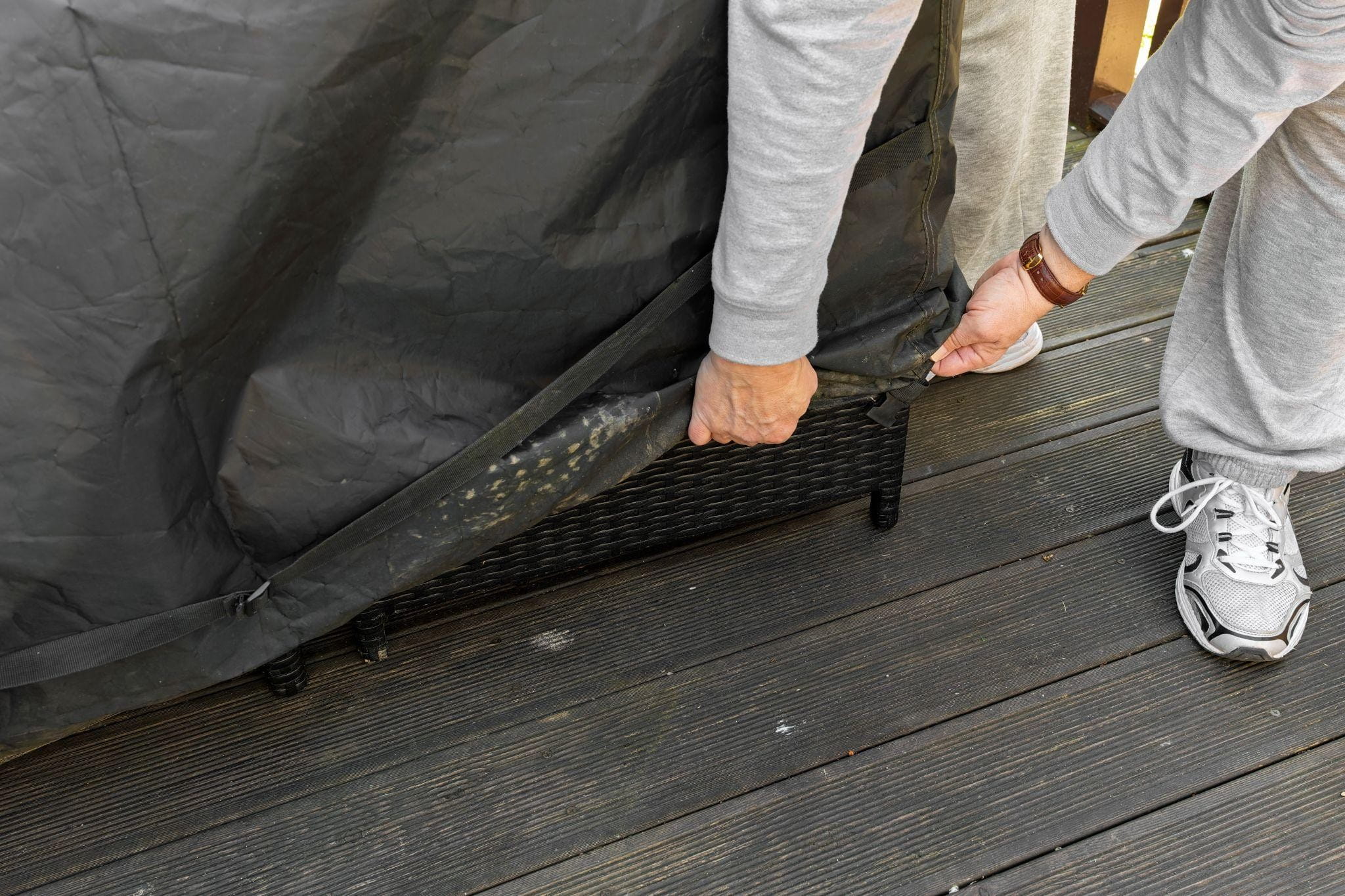
One of the joys of warmer weather is getting to spend more time outdoors. But there’s no worse frustration than heading outside to set yourself up on your outdoor chair with a book and a hot cuppa, only to find the entire piece covered in mould. Outdoor furniture is built to live outside, but that doesn’t mean it should be left completely exposed to the elements.
Rain, harsh UV rays, wind, dirt, and moisture can all gradually take their toll on your furniture, and the cover protecting it isn’t immune either. Even good outdoor furniture covers will eventually show signs of wear. But the tricky part is knowing when an outdoor furniture cover simply needs a good clean and when it’s no longer doing its job.
From mould and fading to cracking, tears, and water getting through, these are seven signs it could be time to replace your outdoor furniture covers.
Why Furniture Covers Wear Out Faster in Australian Conditions
Australia’s harsh climate can be tough on outdoor furniture. Long periods of intense sunlight, sudden downpours, high humidity, coastal salt, and strong winds can all accelerate material deterioration. Your cover is effectively taking the hit instead of your outdoor furniture, which is exactly what you want.
But over time, that exposure can weaken the material. A cover that once kept your outdoor setting dry and protected might eventually become brittle, develop small tears, and allow moisture to seep through. That’s why it’s worth checking your covers regularly rather than waiting until the furniture underneath starts showing signs of damage.
Here are seven signs it’s time to replace your outdoor furniture covers.
1. Mould or Mildew That Won’t Wash Out
A little surface dirt isn’t the end of the world, but persistent mould or mildew, well, that’s a whole different beast. Moisture can become trapped underneath a cover, particularly when furniture is covered while damp or when there isn’t enough airflow. Over time, this creates an environment where mould and mildew can develop.
If a thorough clean removes the growth and the cover remains in good condition, there may be no need to replace it. But if mould keeps returning, has penetrated the material, or is accompanied by deterioration, then it could be time for a new cover. Regular cleaning and allowing your furniture and cover to dry properly can help prevent the problem in the first place.
2. Cracking, Splitting, or Peeling Material
Take a close look at the surface of your furniture cover. Does it feel brittle? Are you seeing cracks, splits, or sections that appear to be peeling off? These are clear signs that the material is breaking down.
Prolonged UV exposure can gradually weaken some materials, particularly cheaper covers that rely on surface coatings for protection. Once the material starts cracking or splitting, it becomes much easier for rain to get through and for small areas of damage to become larger ones. There’s little point keeping a cover that looks intact from a distance but is already failing up close, so a replacement is usually the better option at this point.
3. Fading That Signals UV Breakdown
Fading doesn’t automatically mean your cover has reached the end of its life. Outdoor furniture covers can naturally lose some colour after prolonged exposure to the sun. However, significant fading can be a warning sign when it appears alongside brittleness, cracking, or other material damage.
UV exposure can affect more than just appearance. Over time, it can contribute to the material’s deterioration. If your cover has spent years sitting in direct Australian sun and is now noticeably weaker, it’s worth considering a replacement with built-in UV inhibitors for protection.
4. Tears, Holes, or Fraying Seams
Obviously, if there is a giant gash through the middle of your furniture cover, you should replace it, but it’s easy to overlook small, hidden areas of damage. Check the corners, seams, eyelets, and fastening points that experience the most movement. Wind can put considerable strain on a cover, particularly when loose material is allowed to flap in strong winds.
A small tear might be repairable if the rest of the cover is in good condition, but if you’re seeing multiple holes, tears, or fraying seams, then the cover may have reached the end of its useful life. A durable replacement should have strong construction and good resistance to tearing and abrasion. A heavy-duty outdoor furniture cover can be particularly useful for furniture exposed to severe weather or regular outdoor use.
5. Elastic or Straps No Longer Fit Snugly
A cover can be made from excellent material and still fail if it won’t stay where it’s supposed to. Loose elastic, stretched straps, or damaged fastening points can leave gaps around the furniture and make the cover vulnerable to wind. And once wind gets underneath, things can get ugly fast.
A good fit helps keep rain, dirt, and debris out while reducing movement. When replacing your outdoor furniture cover, look for practical fastening features such as drawstrings, cord locks, or straps to secure the cover around the furniture. ARK Tarps furniture covers feature drawstring bottoms with cord locks to help keep them secure in windy conditions.
6. Water Soaking Through Instead of Beading
When rain hits your furniture cover, it should simply roll away. Water resistance can deteriorate as some covers age, particularly when their protective coating has worn away. So if water is now soaking into the material rather than beading on the surface, it’s time to replace it.
Persistent leaks, damp patches or water pooling underneath are all reasons to inspect the cover closely. But if your cover is advertised as waterproof and is still in good condition, water shouldn’t simply be passing through the material. If waterproofing has been compromised, replacing it with waterproof outdoor furniture covers can provide much more reliable protection for furniture that stays outside year-round.
7. A Persistent, Musty Smell
Sometimes your nose spots the problem before your eyes do. A musty smell that keeps returning can indicate trapped moisture, mould, or mildew underneath the cover. It’s particularly common when furniture or cushions get covered while damp.
First, remove the cover, clean it according to the manufacturer’s instructions and allow everything to dry completely. If the smell keeps returning despite proper cleaning and drying, inspect the material for mould, moisture damage, or deterioration within. A persistent smell can be a sign that the cover is no longer providing a clean, dry environment for your furniture.
Clean, Repair, or Replace? How to Decide
Not every worn-looking cover needs to go straight in the bin. The important thing is to look at the overall condition. A small cosmetic issue isn’t necessarily a problem, but several signs of deterioration usually mean the cover has done its job and is ready for retirement.
Use this simple guide to help you decide whether you should clean, repair, or replace your outdoor furniture cover.
| Clean, Repair, or Replace: How to Decide | |
|---|---|
| What you’re seeing | What to do |
| Surface dirt or dust | Clean the cover |
| Minor, isolated damage | Consider repairing it |
| Slight fading but material remains strong | Continue using and monitor it |
| Persistent mould or mildew | Clean thoroughly; replace if it returns |
| Cracking or brittle material | Replace the cover |
| Multiple tears or fraying seams | Replace the cover |
| Water soaking through | Replace if waterproofing has failed |
| Damaged fastening system | Repair or replace depending on condition |
FAQs
How long do outdoor furniture covers usually last?
There’s no set lifespan for outdoor furniture covers. It depends on the material, UV exposure, weather, usage, and maintenance. A well-made cover that is properly cared for can last considerably longer than a cheaper alternative.
Can mould be cleaned off, or does the cover need replacing?
It depends on the condition. Surface mould may be removable with appropriate cleaning, but persistent mould, recurring moisture or material deterioration can indicate that replacement is the better option.
What material lasts longest in Australian sun and rain?
Look for a durable material with built-in UV resistance and reliable waterproofing. Strong construction and secure fastening are also important for outdoor furniture exposed to wind and weather.
Should outdoor furniture covers be removed and stored in summer?
Not necessarily. Covers can provide valuable protection from the intense Australian sun. However, they should be removed periodically so the furniture and cover can dry and air properly.
How tight should an outdoor furniture cover fit?
It should provide good coverage without being excessively loose. A secure, practical fit helps reduce wind movement while allowing enough clearance around the furniture for airflow.
Protect Your Furniture with ARK Tarps Before Damage Starts
A good cover is there to take the punishment from the weather so your furniture doesn’t have to. If you’re seeing cracking, persistent mould, tears, water ingress or a cover that simply won’t stay secure, it may be time for a replacement. After all, replacing a worn-out cover is a lot easier than replacing an entire outdoor furniture set.
Whether you need covers for a lounge, dining setting, chairs or other outdoor furniture, choosing the right size and material can make a big difference to how long the cover lasts. ARK Tarps uses Swiss-patented XF Film in its covers, with laminated layers designed to provide strength while remaining lightweight and flexible. The range includes 90 GSM Classic covers with a one-year warranty and 160 GSM Premium covers with a three-year warranty.
And remember, outdoor protection doesn’t stop with the furniture. We also sell outdoor covers for everything from BBQs to spas and patio heaters, including dedicated BBQ covers and caravan covers. For more options, explore our outdoor furniture cover range and find a cover suited to your setup.
Explore the full outdoor furniture covers range from ARK Tarps and choose a durable cover built to handle Australian conditions!


 No products in the cart.