If you’ve ever compared tarps online, then you’ve probably come across numbers like 70 GSM, 120 GSM, or 200 GSM. But what do these numbers actually mean, and how do you know which tarp GSM is the right choice for your needs? Well, ARK Tarps has got you covered – here’s a guide on everything you need to know about tarp GSM.
GSM stands for grams per square metre, and this indicates how much a square metre of tarp material weighs. Generally, a higher GSM means a heavier material, indicating greater durability. However, tarp GSM rating isn’t the only specification that matters.
The material itself, the construction, and the waterproofing, UV resistance, and reinforcement of the tarp affect its performance outdoors. So, before choosing the heaviest tarp you can find, it’s worth understanding what GSM really tells you.
What Does GSM Actually Mean?
GSM is an acronym standing for grams per square metre. In simple terms, it measures the weight of a square metre of material. For example, a 120 GSM tarp material weighs approximately 120 grams per square metre, while a 200 GSM material weighs approximately 200 grams per square metre.
This makes GSM useful for comparing tarpaulins. It provides a quick way to understand a material’s relative weight. But GSM measures weight, not thickness, so two materials with the same GSM can have very different properties depending on their manufacture and composition.
Why does GSM matter?
In general, increasing the GSM of a tarp means adding more material weight and often greater resistance to wear and tear. This is why extra heavy-duty tarp materials are commonly used for demanding applications. There is a trade-off, though: a heavier tarp can also be more difficult to carry, fold, install, and properly store.
The right GSM for your tarp depends on what you’re actually using it for.
How Is GSM Measured?
GSM can be calculated by dividing the weight of a piece of material by its total area in square metres.
GSM = material weight ÷ area in square metres
For example, if a 5 m x 5 m piece of material weighs 10 kg, then it covers 25 square metres. Its GSM would therefore be approximately 400 GSM.
Remember, GSM refers to material weight per square metre, not the total weight of the tarp. A large tarp will naturally weigh more than a smaller tarp made from the same material with the same GSM rating.
Does a Higher GSM Always Mean a Better Tarp?
No, GSM does not always equate to tarp quality. A higher GSM can indicate a heavy-duty tarp material, but it doesn’t automatically make one tarp better than another. The construction of the material matters just as much, if not more!
Different materials can achieve their strength in different ways. A tarp may have laminated layers, a particular weave, a specialised film or a protective coating that affects its durability. Reinforced edges, eyelets and seams can also make a significant difference to how well it performs in real-world conditions.
ARK Tarps is a good example of why you shouldn’t judge a tarp by GSM alone. Our ARK Tarps Heavy-Duty Tarps use 120 GSM XF Film and are designed to be lightweight while still providing waterproofing, UV resistance, and multi-directional strength.
So, when you’re comparing heavy-duty tarp GSMs, consider the complete specification rather than simply choosing the highest number.
GSM Ranges by Material — Poly, Canvas and PVC
There is no single “ideal” tarp GSM. The right range depends on the material, the tarp’s construction, and what it needs to withstand. Here is a basic comparison of GSM ranges for common tarp materials.
| GSM Ranges: Poly vs. Canvas vs. PVC | |||
|---|---|---|---|
| Material | GSM | Key characteristics | Common applications |
| Poly tarpaulin | Approx. 90–240 GSM | Lightweight, easy to handle, versatile, suited to less demanding applications | General-purpose covers, gardening, camping, temporary weather protection |
| Canvas tarpaulin | Approx. 370–680 GSM | Heavier, durable and breathable; reduces trapped moisture and condensation | Equipment covers, agricultural applications, outdoor storage and applications where breathability matters |
| PVC tarpaulin | Approx. 430–900 GSM | Heavy-duty, waterproof, abrasion-resistant, higher GSM options | Transport, freight, construction, industrial and demanding outdoor applications |
| XF Film tarpaulin | Approx. 200 GSM | Lightweight, flexible, and incredibly strong, similar to lycra. | XF-Film is an extremely strong, high-performing material made using a Swiss-patented process with precise, technologically advanced manufacturing. Suitable for nearly all uses. |
NOTE: These are general GSM ranges, not fixed industry standards.
The key takeaway should be that GSM is most useful when you’re comparing like-for-like materials!
What GSM Do You Actually Need? A Job-by-Job Guide
Instead of asking, “What’s the highest GSM tarp?”, it may be more helpful to ask, “What does my tarp need to withstand?” From 70 GSM to 250 GSM, the most helpful GSM depends on what you intend to do with your tarp. Here is a basic job-by-job guide to help you determine what GSM you may need for which purpose.
General-purpose covering: 70 GSM
For occasional use around the home, in your garden, or at a campsite, a lighter or medium-duty tarp can be easier to carry, position, and store. If the tarp won’t experience significant abrasion, wind, or repeated handling, there’s often little reason to choose an exceptionally heavy material.
Demanding outdoor applications: 150 GSM
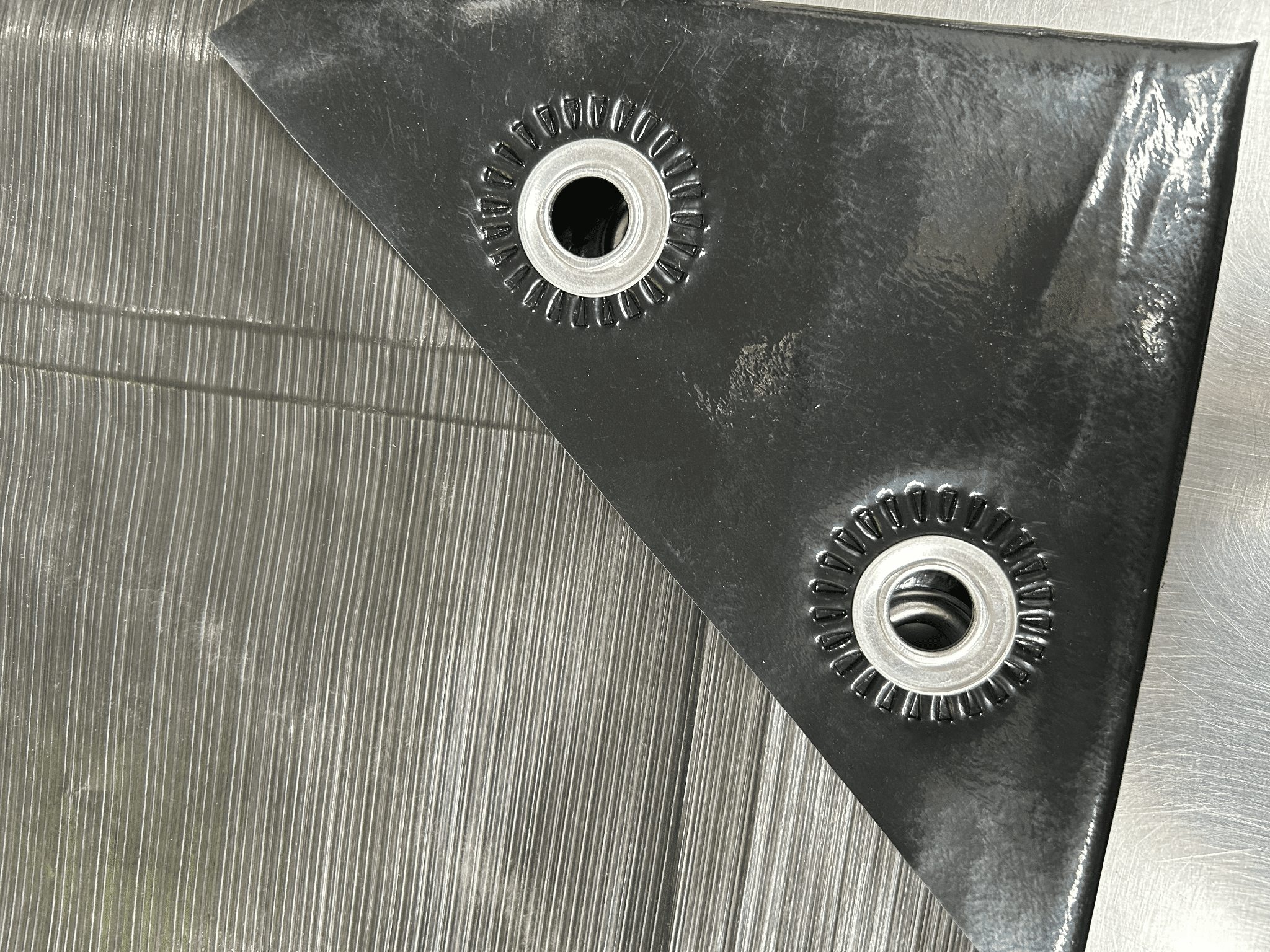
For construction, agriculture, freight, machinery, and other demanding jobs, you may need more robust materials and construction. Our Extra-Heavy-Duty Tarps use XF Film and feature waterproof construction, UV resistance, tear resistance, and ultrasonically welded eyelets, making them ideal for rugged outdoor applications.
Industrial and commercial use: 200GSM
For more demanding commercial applications, tarp construction becomes especially important. Our Industrial Tarps are designed for applications including construction, freight, agriculture, machinery and large-scale outdoor coverage.
Trailers, utes, and caravans: 250 GSM
Trailer and ute covers need to withstand regular handling, movement, wind, and weather exposure. This is where a heavy-duty tarp’s GSM matters most. You’ll generally want to prioritise how seams affect tarp durability, tie-down points, waterproofing and UV resistance alongside the GSM.
ARK Tarps: Tough Enough for Any Situation
Our Heavy-Duty Tarps are engineered to be the perfect everyday solution — strong, reliable and effortless to handle. Made from 120 GSM Swiss‑patented XF Film, they deliver full waterproof protection, long‑lasting UV resistance and dependable durability in Australia’s harsh outdoor conditions.
Lightweight yet tough, they’re ideal for covering vehicles, outdoor furniture, building materials and general home or farm equipment. With secure, ultrasonically welded eyelets and proven all‑weather performance, this is the tarp you reach for when you need protection that simply works.
For tarps tough enough for any situation, shop our full tarp range online at ARK Tarps!
FAQs
Is a higher GSM tarp always stronger?
No. Higher GSM means a heavier material, but strength also depends on the material, construction, reinforcement and seams.
What GSM tarp do I need for a trailer or ute?
Choose a durable, weather-resistant tarp suited to regular handling and exposure. GSM is only one factor to consider.
How is tarp GSM tested or measured?
GSM measures the material’s weight in grams per square metre.
Does GSM affect how waterproof a tarp is?
Not directly. Waterproofing depends on the material, coating, construction, seams, and GSM.
What’s the difference between GSM and mil thickness?
GSM measures weight per square metre, while mil measures material thickness. They are different measurements.
Can a low GSM tarp still be heavy-duty?
Yes. The material and construction matter too. ARK’s 120 GSM Heavy Duty Tarps, for example, combine lightweight handling with waterproofing, UV resistance and durability.



 No products in the cart.