
Heavy-duty tarps are some of the most useful and adaptable tools you can own. A heavy-duty, waterproof tarp is useful for many things, like working in your garden at home, going on a road trip in a caravan, or camping.
But “heavy-duty” doesn’t mean “indestructible”, no matter how strong your tarps are. Your ARK Tarps tarp can handle a lot, but to make sure it lasts for years, you need to clean and store it properly.
In this guide, we will cover some of the most critical heavy-duty tarp need-to-knows, along with essentials for cleaning and storing tarps. With the proper knowledge, your heavy-duty tarp will see you through both rain and shine for at least 3 years—or more!
What Is a Heavy-Duty Tarp?
A heavy-duty tarp is a high-strength, all-weather cover designed to protect assets in demanding outdoor conditions. Our ARK Tarps heavy-duty tarps are engineered using advanced XF Film technology, delivering a lightweight yet extremely durable solution that outperforms standard PVC, canvas, and other woven tarp options.
Unlike basic covers, heavy-duty waterproof tarps are built to be fully waterproof to their core, not just surface-coated, ensuring long-lasting protection against rain, moisture, and harsh Australian weather. With built-in UV resistance and reinforced construction, these tarps are ideal for everything from vehicles and equipment to construction materials and outdoor storage.
| Key Characteristics of a Heavy-Duty Tarp | |
|---|---|
| Feature | Description |
| Waterproof | 100% waterproof material throughout, not just coated |
| Material | 120 GSM XF Film (Swiss-patented technology) |
| Strength | Multi-layer, cross-laminated construction for tear resistance |
| UV Protection | Built-in UV inhibitors with a 3-year guarantee |
| Eyelets | Ultrasonically welded for superior durability |
| Weight | Lightweight and easy to handle |
| Reliability | Australian lab tested |
For more demanding applications, options such as extra-heavy-duty and industrial tarps provide even greater strength and performance.
What Causes Heavy-Duty Tarps to Fail Prematurely?
Even a strong, heavy-duty tarp can fail early if it is made from low-quality materials or used incorrectly. Many standard options rely on thin coatings for waterproofing, which can wear off, leading to leaks and reducing the effectiveness of a waterproof tarpaulin over time.
UV exposure presents another issue. Without legitimate, built-in protection, constant sun can cause tarp materials to crack, fade, and weaken quickly—and in Australia’s harsh conditions, this problem can be especially bad.
Construction quality also matters. Tarps made with weak fibres, single-layer designs, or poorly attached eyelets are far more likely to tear or come loose in windy conditions and heavy use.
Finally, improper handling, like overstretching, loose tie-downs, or allowing water to pool, can put extra strain on a heavy-duty tarp and shorten its lifespan. In most cases, early failure comes down to poor materials, weak construction, and avoidable misuse.
Cleaning vs. Neglect — What the Difference Looks Like
When using an ARK Tarps heavy-duty tarp, quality build and materials are truly your last concerns—guaranteed! Instead, the biggest threat to the longevity of your heavy-duty or waterproof tarp is improper cleaning and general neglect.
Tarp Lifespan — With vs. Without Proper Care
A well-maintained tarp can last for years, retaining its strength, waterproofing, and flexibility. Regular cleaning and correct storage prevent buildup that can weaken the material over time.
In contrast, neglected tarps often degrade much faster, with dirt, moisture, and UV exposure accelerating wear and tear, especially in long-term outdoor applications such as silage tarps.
What Mould and UV Damage Actually Do to Tarp Material
Mould thrives in damp, dirty conditions and can break down a tarp’s structure, leading to stains, odours, and material weakening. At the same time, constant UV exposure without basic care can dry out the material, making it brittle and prone to cracking.
The UV exposure factor is particularly common in seasonal use cases, such as with hay tarps, where exposure to the elements is unavoidable.
Cost Impact — Replacing Early vs. Maintaining Properly
Neglecting a tarp often leads to premature replacement, increasing long-term costs. Regular cleaning and simple upkeep, however, are low-effort ways to protect your investment and avoid unnecessary spending.
A small amount of maintenance goes a long way in preserving performance.
How Tarp Grade Affects Maintenance Requirements
Higher-grade tarps are designed to handle tougher conditions and typically require less intensive maintenance. However, no tarp is completely maintenance-free.
Regardless of quality, consistent care ensures optimal performance and maximises your tarp’s value over time.
How to Clean Heavy-Duty Tarps — Step by Step
Knowing how to clean your heavy-duty tarp properly is key to maintaining its performance and extending its lifespan. With the right approach, you can keep your waterproof tarp in top condition without damaging the material.
What You’ll Need (Equipment Checklist)
Start with a few basic items:
- Soft-bristle brush or broom
- Mild soap or detergent
- Hose or low-pressure water source
- Bucket of warm water
- Clean cloth or sponge
Avoid harsh chemicals or high-pressure washers, as these can damage the tarp’s surface and reduce its lifespan.
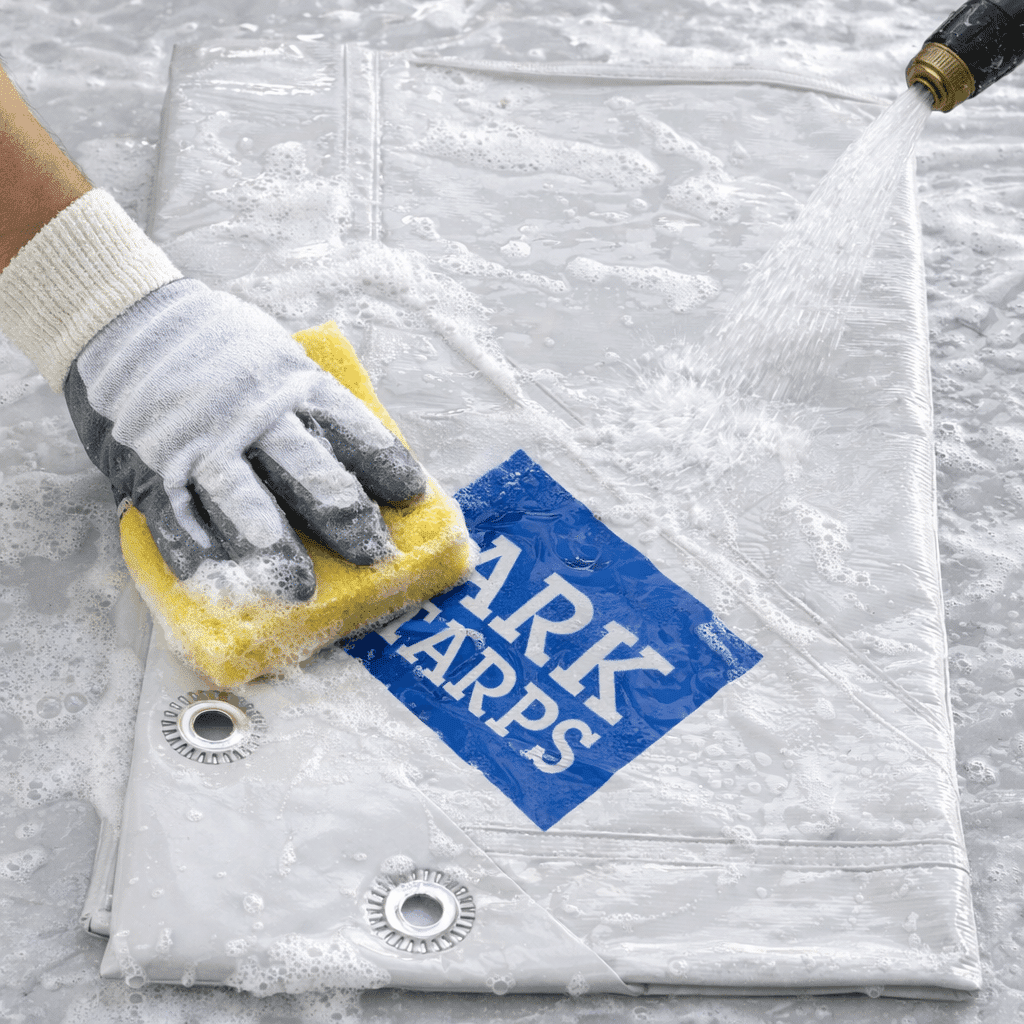
Step-by-Step Cleaning Process
- Lay the tarp flat on a clean surface.
- Rinse off loose dirt and debris with water.
- Use a mild soap solution and a soft brush to gently scrub the surface.
- Pay extra attention to corners and eyelets where dirt builds up.
- Rinse thoroughly to remove all soap residue.
- Allow the tarp to air dry completely before folding or storing.
Regular cleaning prevents buildup that can weaken the material over time.
Cleaning PVC vs PE vs Canvas Tarps — Key Differences
Not all tarps require the same care. PVC and industrial-grade options, like those found in industrial tarps, are generally more resistant to heavy-duty cleaning but still benefit from gentle handling.
PE-based tarps, including many extra-heavy-duty tarps, should be cleaned more carefully to avoid damaging the laminated structure. Canvas tarps may require more frequent cleaning, as they can absorb moisture and are more prone to mould if left untreated.
How to Remove Mould and Mildew from a Tarp
To remove mould or mildew, use a mild cleaning solution (such as diluted vinegar or specialised tarp cleaner) and gently scrub the affected areas. Avoid bleach unless specifically recommended, as it can weaken certain materials.
After cleaning, rinse thoroughly and ensure the tarp is completely dry before storage. This step is critical: trapped moisture is one of the main causes of recurring mould and long-term damage.
How to Store Heavy-Duty Tarps Correctly
Proper storage keeps your heavy-duty tarp strong, flexible, and long-lasting. Even the most durable tarp can degrade if stored damp, in direct sunlight, or under heavy pressure.
The Right Way to Fold a Heavy-Duty Tarp
- Clean and dry the tarp completely.
- Lay flat and remove twists or wrinkles.
- Fold evenly into manageable sections, avoiding sharp creases.
- Roll large tarps to reduce stress.
- Store neatly in a dry, protected area.
Ideal Storage Conditions — Temperature, Moisture & Light
Keep tarps in a cool, dry, shaded spot. Avoid direct sunlight, damp environments, and heavy objects on top.
Using a breathable storage bag helps prevent dust while allowing airflow, preserving waterproofing and durability.
Keep Your Heavy-Duty Tarps Lasting Longer
Proper care isn’t just a nice habit—it can mean the difference between a tarp that lasts a few seasons and one that protects your equipment, vehicles, or outdoor supplies for years. Knowing how to clean and store your heavy-duty tarps correctly preserves their waterproofing, prevents mould and UV damage, and saves you money on premature replacements.
Make maintenance a regular habit, and your ARK Tarps tarp will stay strong, flexible, and ready for any job, rain or shine. Invest a little time in cleaning and storage today to maximise the performance and longevity of your heavy-duty tarp.



 No products in the cart.