When you’re working on a farm, a tarp is rarely just a tarp. The cover you need for a stack of hay isn’t going to be the same thing you’d use for silage, grain, or expensive machinery. Different jobs call for different levels of waterproofing, UV resistance, and coverage.
Get it right, and a good farm tarp can help protect your feed and equipment from Australia’s extreme, unpredictable weather. Get it wrong, and you could be dealing with water ingress, spoiled feed, or a tarp that has failed and taken flight in a gust of wind.
So, what should you actually look for in a farming tarp? This farm tarp buying guide breaks down all you need to know, from hay tarps and silage covers to grain and machinery protection.
Why One Tarp Doesn’t Suit Every Job on the Farm
Farm tarps can have many uses, but the demands placed on them can vary widely.
Hay needs protection from rain and moisture, while also coping with prolonged sun exposure and wind. Silage has another priority: creating an effective oxygen barrier to support proper fermentation. Grain needs protection from moisture and contamination, while machinery often requires a durable cover that withstands repeated use and exposure to the elements.
That’s why choosing a tarp based on price or tarp thickness alone isn’t always the best approach.
Farmers need to consider the following:
- What is being covered
- How long it will stay covered
- How much UV exposure will there be
- How much wind the tarp will face
- How it will be anchored
Once you know what the tarp actually needs to do, then choosing the right one becomes much easier.
Hay Tarps – What to Look For
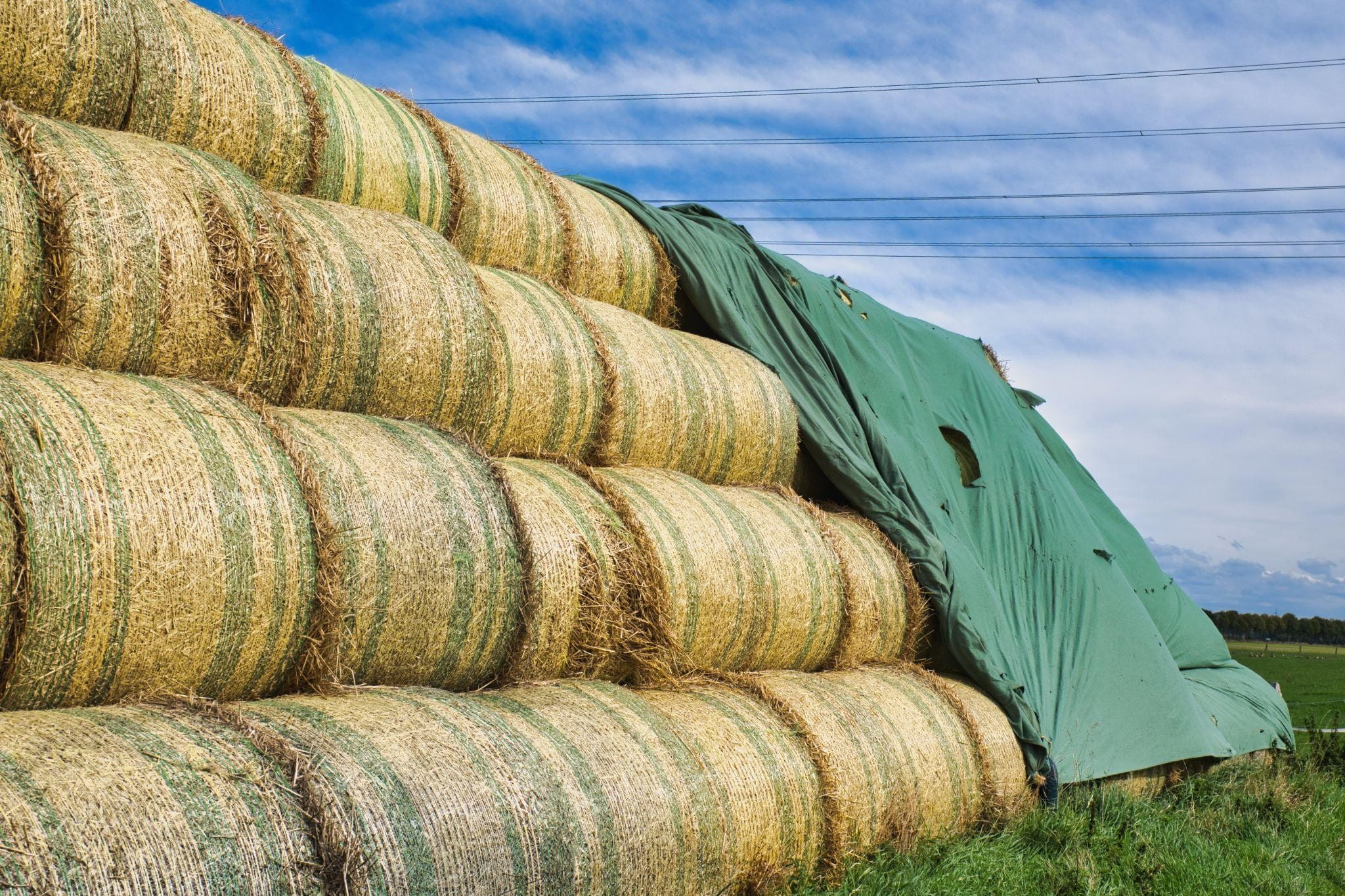
Hay is a significant investment, so keeping it protected after harvest is well worth the effort. But keeping hay protected and dry is sometimes easier said than done. Moisture is one of the biggest concerns, particularly when hay is stored outdoors.
A quality hay tarp should provide reliable waterproofing, UV resistance, and enough strength to withstand strong wind and repeated handling. ARK Tarps hay tarps are made from UV-stabilised Swiss-patented XF Film and are designed to be 100% waterproof. They’re also suitable for both round and rectangular bale configurations.
GSM & Material for Bale Stacks
Tarp GSM refers to grams per square metre and is commonly used to indicate tarp material weight. Generally, a higher GSM can mean a heavier, more robust material, but it shouldn’t be the only thing you look at. Material construction, UV resistance, waterproofing and reinforcement all matter too.
For hay, you want a tarp that can cope with prolonged outdoor exposure without becoming brittle, tearing or allowing water through. Our hay tarps use cross-laminated XF Film, which provides strength in multiple directions rather than relying on a conventional single-direction woven structure.
Sizing for Round vs. Square Bales
The right tarp size is critical. A tarp that’s too small won’t properly protect the stack, while an unnecessarily oversized tarp can be awkward to handle and secure. Round and square bales also require different configurations, so measure your stack rather than guessing from the individual bale dimensions.
We offer dedicated sizing options for both round and square bale stacks, with single-piece tarps available in large formats. If you’re ready to protect your next stack, shop our hay tarp range for purpose-built options.
Silage Tarps – What to Look For
Now, silage is a different beast altogether. Unlike standard covers, silage tarps need to create the required conditions for effective fermentation. That means keeping water out is important, but limiting oxygen exposure is just as critical.
Our ARK Tarps silage tarps are made from 90 GSM or 120 GSM XF Film and are designed to provide waterproofing and a strong oxygen and vapour barrier.
UV Stabilisation & Airtight Seals
A silage cover can spend months being exposed to the elements, so UV resistance is very important. A good silage tarp should also sit securely against the material underneath it, with the edges properly weighted or sealed to minimise air infiltration. Depending on the application, this can mean using tyres, sandbags, other suitable weights or burying the edges in soil.
Our silage tarps have a three-year UV guarantee and are designed to reduce oxygen infiltration, thereby supporting fermentation and minimising the potential for spoilage.
Black vs. White/Black Silage Covers
Colour isn’t just a cosmetic choice. Our silage tarps incorporate a reflective silver top with a dark underside. The silver side helps reflect heat, while the dark side blocks sunlight from reaching the silage underneath.
The result is a cover designed specifically around the needs of stored silage rather than simply repurposing a general-purpose tarp. They also look pretty handsome, too! You can explore our silage tarp range if you’re looking for large-format agricultural coverage.
Grain Tarps – What to Look For
Grain storage also presents another set of challenges. The priority is keeping moisture and contaminants away from stored grain while ensuring the cover itself is secure enough to withstand all outdoor conditions. The storage environment matters too: a tarp sitting directly over grain will experience different stresses than one being used as a temporary weather cover, so consider the shape of the stack, exposure to wind and how often you’ll need to access the grain.
For temporary or outdoor grain storage, look for a waterproof grain tarp with strong attachment points and enough material around the edges for secure tie-down. For more demanding agricultural storage applications, a heavy-duty tarp can provide a practical step up from lighter general-purpose covers.
Machinery & Equipment Covers – What to Look For
Tractors, harvesters, trailers, and other machinery aren’t cheap, and leaving them exposed to sun, rain, and dust isn’t doing you any favours. For machinery covers, look for the following features:
- Waterproof protection
- UV resistance
- Tear resistance
- Strong eyelets or attachment points
- Suitable sizing
- Easy handling and storage
The best option depends on the equipment and environment. A small implement stored under cover may only need a general-purpose solution, while machinery sitting outside for extended periods may benefit from a more robust cover. For tougher jobs, ARK Tarps offers heavy-duty and extra-heavy-duty tarps designed for more demanding applications.
For particularly intensive commercial or industrial applications, industrial tarps are another option worth considering.
Anchoring & Tie-Down Systems for Farm Tarps
Of course, even the strongest tarp won’t work right if it isn’t properly secured. Wind can get underneath a loose cover, creating movement that puts stress on eyelets, seams and the tarp itself. Over time, that repeated flapping can cause premature damage.
For hay stacks, purpose-designed hay tarp anchors can make a major difference. ARK Hay Anchor Bolts are designed to pass through the tarp’s larger eyelets and secure directly into the hay bale stack. However, don’t rely on anchors alone; we recommend using ropes or bungee cords across the top of your tarp as well, which helps prevent wind from getting under the cover and reduces strain on the eyelets.
For silage, the approach is different. Suitable weights, such as sandbags or tyres, can be used, and burying the edges can help create a more effective seal. Secure the tarp evenly, avoid excessive flapping and don’t leave loose edges for the wind to grab.
Buying Checklist – Matching Tarp to Task
Are you still unsure which farm tarp you need? The important thing is to match the tarp to the job rather than trying to make one cover do everything. If you’re unsure where to start, head home and explore the full ARK Tarps Australia range.
Start here by using this tarp buying checklist:
| Tarp to Task Buying Checklist | ||
|---|---|---|
| Farm task | What to look for | Best option |
| Hay stacks | Waterproofing UV resistance Secure anchoring |
Hay tarp |
| Silage |
|
Silage tarp |
| Grain storage |
|
Grain tarp |
| Tractors & machinery |
|
Heavy/extra heavy duty tarp |
| Harsh commercial applications |
|
Industrial tarp |
FAQs
What GSM tarp is best for covering hay?
Choose a purpose-built hay tarp with strong waterproofing, UV resistance and durable construction. GSM is important, but material quality and anchoring matter too.
Can you use the same tarp for silage and hay?
It’s best to use purpose-built hay tarps and silage tarps, as silage requires an effective oxygen barrier and secure sealing.
How do you stop a tarp tearing in strong wind on a farm?
Choose a durable tarp, secure it properly and minimise loose sections that can flap. Use ropes, weights or hay tarp anchors where appropriate.
What size tarp do I need to cover round hay bales?
Measure the entire bale stack and allow enough coverage for the sides and secure anchoring. Check the manufacturer’s sizing guide before buying.
Are silage tarps different from standard heavy duty tarps?
Yes. Silage tarps are designed to provide an oxygen barrier, waterproofing, UV resistance, and light protection.
How long should a good farm tarp last?
Lifespan depends on the material, UV exposure, weather, and care. A quality tarp that’s properly secured and stored can last for multiple seasons. When you’ve got valuable hay, silage, grain or machinery to protect, choosing the right tarp matters.
Match the tarp to the job, get the sizing right and secure it properly.
Protect Your Farm All Year Long With ARK Tarps
Need a tarp for your next farming season? Explore the full ARK Tarps Australia range and find a durable cover built for the task at hand. From hay and silage to grain and machinery, the right tarp can make all the difference when you’re protecting valuable farm assets from Australia’s unpredictable weather.
Whatever you’re protecting, ARK Tarps has got you covered.
 No products in the cart.